NCU Cognitive Scientists at the 10th Summer School of Cognitive Science
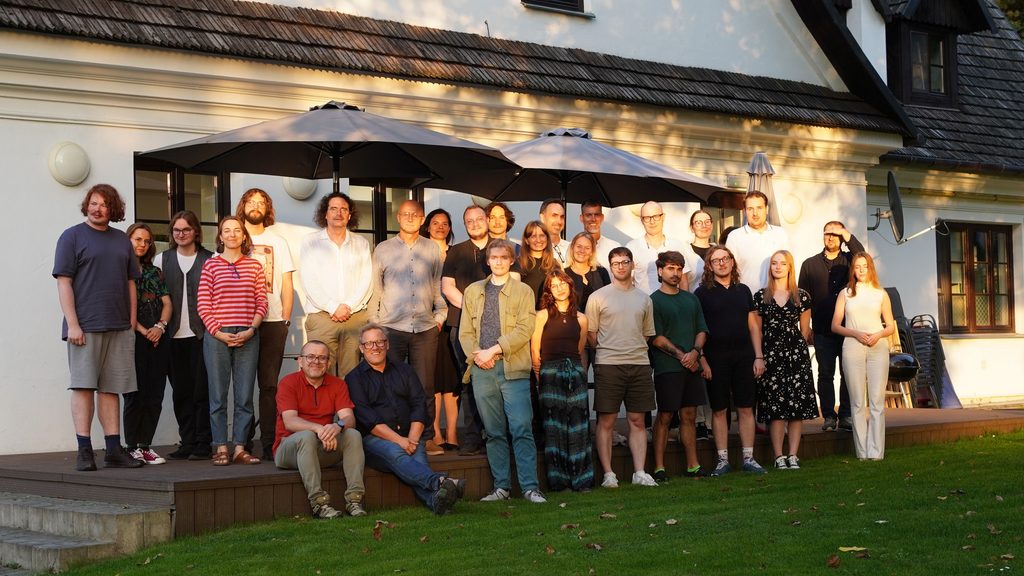
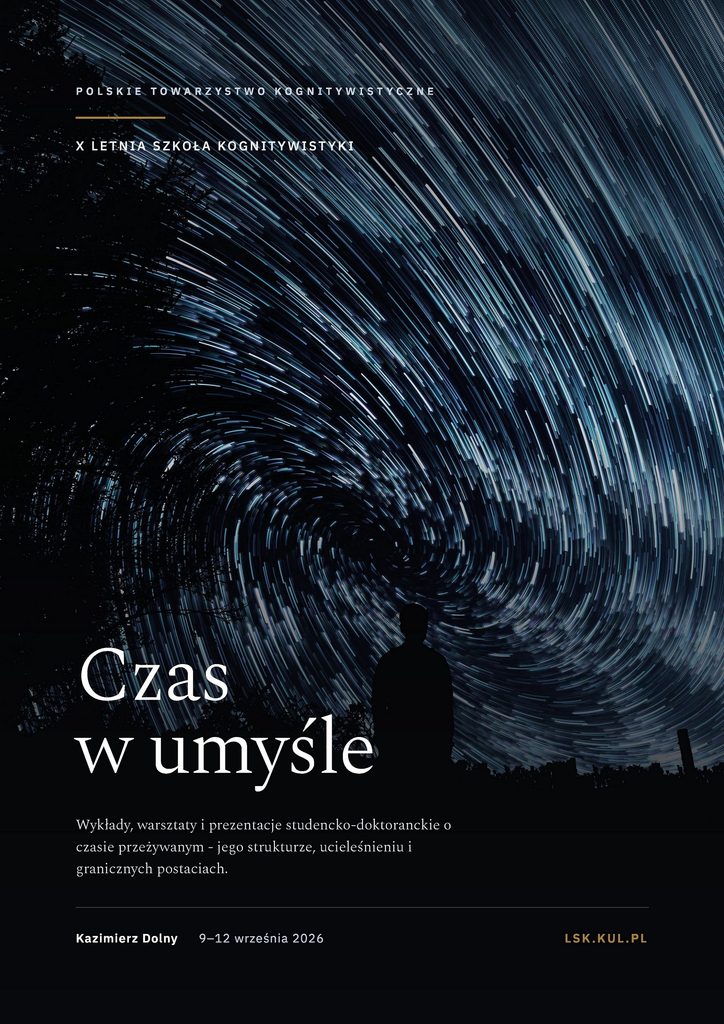
On September 9–12, 2026, the 10th Summer School of Cognitive Science took place in Kazimierz Dolny under the theme „Time in the Mind.” The event was co-organized by the Department of Cognitive Science at Nicolaus Copernicus University (NCU), the Institute of Philosophy at the John Paul II Catholic University of Lublin (KUL), and the Institute of Philosophy at Maria Curie-Skłodowska University (UMCS), with NCU researchers playing a particularly active role in the program.
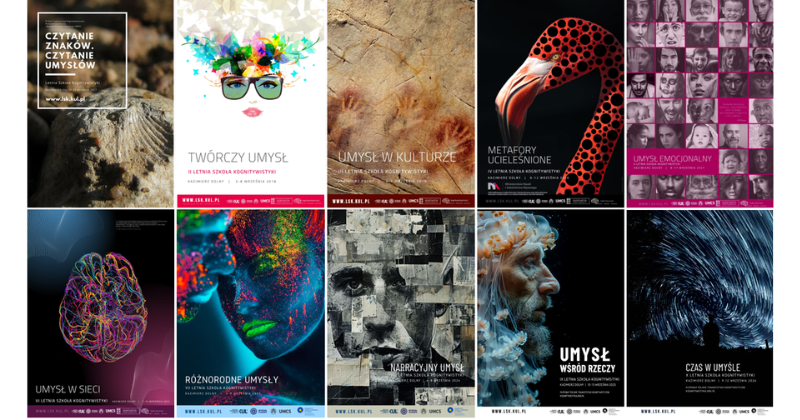
The Summer School of Cognitive Science (LSK) was founded in 2017. It is aimed at early-career researchers, doctoral candidates, and students of cognitive science programs, as well as academic institutions conducting research across the broadly defined field of cognitive science. Since its first edition, the event’s format has combined plenary and guest lectures, thematic workshops, and student-doctoral sessions. Ten editions held to date have established Kazimierz Dolny as a recognized hub for annual cognitive science debate in Poland.
From the very beginning, the School has been organized under the auspices of the Polish Cognitive Science Society, with its founders and primary coordinators being Prof. Arkadiusz Gut and Dr. Andrzej Zykubek, who have represented the Toruń cognitive science center for several years.
During this year’s edition of LSK, we reflected on time—a phenomenon that is, on the one hand, intimate and intuitive, yet on the other, extraordinarily challenging to analyze rationally. The theme of the 10th LSK encourages collaborative inquiry into the links between time and mind that moves beyond common-sense categories of clock time, traditional information-processing models, and standard experimental paradigms that reduce time to objectified measurements. Rather than treating time merely as an epiphenomenon of brain processes, we analyze lived time as a constitutive element of the structure of consciousness. We are interested not only in how the mind measures time, but above all in how it „creates” and experiences it. How is it that we experience continuity rather than a disjointed slideshow? What role does temporality play in a subject’s sense of continuity and identity? How do our bodies, emotions, and social interactions modulate the flow of moments?
The School was officially opened by Arkadiusz Gut, President of the Polish Cognitive Science Society, who drew upon nostalgia research in his opening address. On Thursday, September 10, attendees were treated to a true „double feature” from Toruń. Paweł Gładziejewski and Aleksander Milczanowski (NCU Department of Cognitive Science) delivered a lecture titled Varieties of psychedelic timelessness: an LLM-assisted qualitative study of altered temporal experience—a study based on an analysis of over 7,000 psychedelic trip reports coded using large language models to map various modes of the experience of „timelessness.” A few hours later, Andrzej Zykubek gave a lecture titled How Does a Cell (and the Body) Know What Time It Is? As it turns out, our brain does not possess a single clock; rather, it has several, hierarchically arranged and operating at different levels of biological organization. These systems are neither entirely independent of one another nor are they a single mechanism stretched across varying timescales. This is one of the key takeaways from modern neurogenetics of time: the brain asks „what time is it?” differently than it asks „how long did that last?”, and it answers each through entirely distinct molecules, cells, and circuits.
That same day, in the student and doctoral session „Dimensions of Time in Psychopathology,” Milena Celebudzka presented the framework for her doctoral project on the embodied, pre-reflective determinants of health behaviors in obesity. Meanwhile, in the „New Technologies and the Study of Temporal Experience” session, Albert Łukasik discussed shifts in time perception during gamified polyrhythmic training in virtual reality, combining EEG, HRV, and respiratory measurements with an investigation into the flow state. Concluding the student section in the panel „The Many Faces of Cognitive Science,” Kamil Bagiński presented the results of an analysis comparing Polish cognitive science curricula from the 2019/20 and 2025/26 academic years, tackling the question of how much time it takes for the way this degree is taught to evolve.
Six researchers, four days, and topics ranging from molecular biological clocks to psychedelic timelessness and VR polyrhythmic training—Toruń’s cognitive science presence resonated distinctly in Kazimierz Dolny.